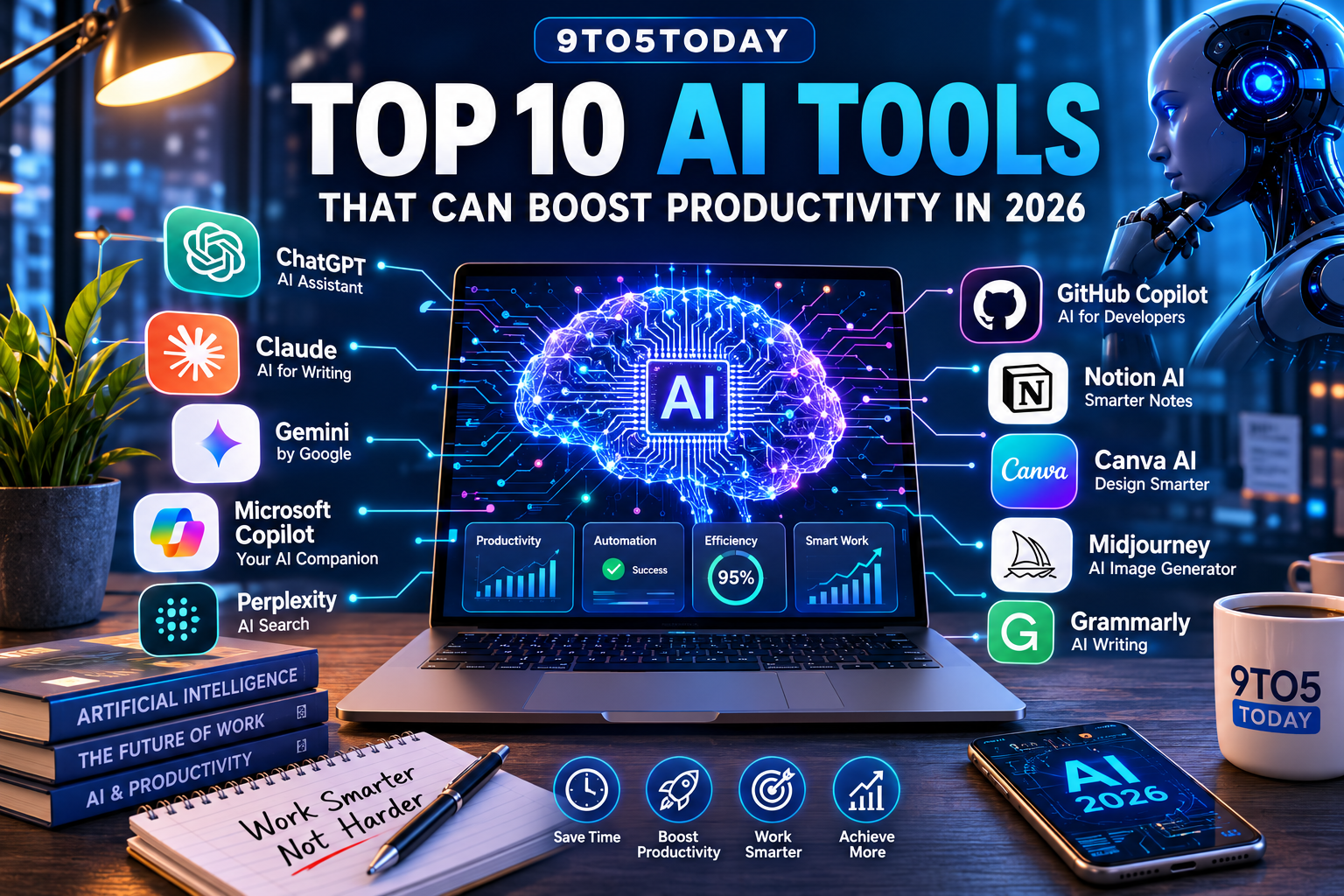

ChatGPT New Features – Artificial intelligence is no longer a futuristic concept—it has become an essential part of modern life. From helping businesses automate repetitive tasks to assisting students with research and enabling developers to write better code, AI tools are transforming how people work, learn, and create. At the center of this transformation is ChatGPT, one of the world’s most widely used AI assistants.
Over the past few years, ChatGPT has evolved from a simple conversational chatbot into a powerful productivity platform capable of writing articles, analyzing documents, generating code, brainstorming ideas, translating languages, and assisting with complex problem-solving. Millions of individuals and organizations now use it daily to save time, improve efficiency, and unlock new creative possibilities.
As AI technology advances, OpenAI continues to introduce improvements designed to make ChatGPT more capable, reliable, and useful. The latest updates focus on delivering better reasoning, faster responses, improved collaboration, enhanced content generation, and a more natural user experience.
These improvements are not only exciting for AI enthusiasts—they have practical implications for professionals across nearly every industry. Whether you’re a business owner, marketer, software developer, teacher, student, freelancer, or content creator, understanding these new capabilities can help you take advantage of one of the most powerful digital tools available today.
In this comprehensive guide, we’ll explore the latest improvements to ChatGPT, explain what they mean for everyday users, discuss practical applications across different industries, and examine how AI is shaping the future of work.
The Evolution of ChatGPT
When ChatGPT first became available to the public, many people viewed it as an impressive chatbot capable of answering questions and generating short pieces of text. While that alone attracted millions of users, the technology has rapidly evolved far beyond simple conversations.
Today’s ChatGPT functions more like an intelligent digital assistant that can understand context, reason through complex requests, and support a wide range of professional tasks. Organizations use it to improve customer service, automate documentation, accelerate software development, and enhance workplace productivity.
This rapid evolution reflects the broader transformation taking place in artificial intelligence. Instead of replacing human creativity, AI is increasingly being used to augment it—helping people work faster, make informed decisions, and focus on higher-value activities.
Several factors have contributed to ChatGPT’s growing popularity:
- A simple and intuitive interface.
- Natural conversational responses.
- Strong writing and editing capabilities.
- Assistance with programming and technical tasks.
- Support for multiple languages.
- Ability to summarize complex information.
- Continuous improvements through regular updates.
Rather than remaining a static product, ChatGPT has become a constantly evolving platform that receives new capabilities as AI research progresses.
Why These New Features Matter
Every significant update to ChatGPT expands what users can accomplish. For casual users, improvements may simply make conversations feel more natural. For businesses and professionals, however, these changes can translate into meaningful productivity gains.
Consider a marketing team preparing a product launch. Instead of spending hours drafting campaign ideas, writing ad copy, brainstorming headlines, and editing social media posts manually, AI can assist throughout the creative process. Human expertise remains essential, but repetitive work can often be completed much faster.
Similarly, software developers can use ChatGPT to explain unfamiliar code, identify potential bugs, generate documentation, or explore different implementation approaches. Students can receive step-by-step explanations for challenging concepts, while entrepreneurs can quickly develop business plans, marketing strategies, and customer communication.
The newest improvements aim to make these interactions even more effective by increasing accuracy, improving reasoning, and reducing the need for repeated prompts.
Ultimately, these updates are about more than convenience—they represent another step toward AI becoming a trusted workplace assistant.
Key Improvements Users Are Seeing
Although specific capabilities may vary depending on the version of ChatGPT being used, recent improvements focus on several major areas.
1. Better Reasoning
One of the most noticeable improvements is stronger reasoning ability.
Earlier AI systems occasionally produced answers that sounded convincing but lacked logical consistency. Modern models are significantly better at understanding complex instructions, following multi-step requests, and producing coherent explanations.
This improvement becomes especially valuable when working on tasks such as:
- Strategic planning
- Business analysis
- Programming
- Research summaries
- Technical documentation
- Educational explanations
Users can now ask more sophisticated questions without needing to break every request into multiple smaller prompts.
2. Improved Writing Quality
Writing remains one of ChatGPT’s most popular uses.
The latest improvements help produce content that feels more natural, better organized, and easier to read.
Examples include:
- Blog posts
- Business emails
- Product descriptions
- Reports
- Marketing copy
- Social media content
- Press releases
- News summaries
Instead of generating generic paragraphs, ChatGPT is increasingly capable of adapting tone and structure for different audiences.
A startup founder might request investor-focused language, while a teacher may prefer clear educational explanations. The flexibility of AI-generated writing continues to improve with each update.
3. Faster Responses
Speed matters when AI becomes part of everyday workflows.
Recent optimizations have reduced waiting times for many tasks, allowing users to receive responses more quickly while maintaining quality.
For professionals who interact with AI dozens of times each day, these improvements can save valuable time.
Imagine preparing a presentation with twenty separate prompts. Faster response times allow ideas to flow naturally without frequent interruptions.
4. Better Context Understanding
One of the biggest challenges for conversational AI has always been maintaining context throughout longer discussions.
Newer versions of ChatGPT demonstrate improved ability to understand ongoing conversations, reducing the need for users to repeat information multiple times.
For example, if you’re writing a detailed report, the AI can better remember earlier sections of the conversation and maintain consistency throughout the document.
This creates a more natural experience and allows users to work on larger, more complex projects.
How Businesses Are Using ChatGPT Today
Businesses of all sizes are discovering practical ways to integrate AI into daily operations.
Instead of replacing employees, organizations are primarily using ChatGPT to automate repetitive tasks while allowing staff to focus on strategic work.
Some of the most common business applications include:
Customer Support
Companies use AI to draft responses, summarize support tickets, and assist customer service representatives with information retrieval.
Marketing
Marketing teams generate campaign ideas, advertising copy, newsletters, landing pages, blog articles, and product descriptions more efficiently.
Sales
Sales professionals use ChatGPT to prepare personalized outreach emails, meeting summaries, proposal drafts, and follow-up communication.
Human Resources
HR departments increasingly rely on AI to create job descriptions, interview questions, onboarding materials, internal policies, and employee training documentation.
Internal Knowledge Management
Organizations often maintain thousands of pages of documentation.
AI can help employees quickly locate relevant information, summarize lengthy documents, and explain technical procedures without manually searching through multiple files.
Why Professionals Should Pay Attention
Artificial intelligence is no longer limited to technology companies.
Today, professionals in healthcare, education, finance, manufacturing, retail, law, logistics, media, and government are experimenting with AI to improve productivity and decision-making.
Learning how to work effectively with AI is becoming an increasingly valuable skill.
Those who understand how to combine human expertise with intelligent automation are likely to gain a competitive advantage as organizations continue adopting AI-powered tools.
Rather than replacing professional judgment, ChatGPT works best as a collaborative assistant—handling repetitive tasks, organizing information, generating ideas, and helping users focus on creative thinking and strategic decision-making.
As future updates continue to expand its capabilities, ChatGPT is expected to play an even larger role in shaping the modern workplace.
ChatGPT for Software Developers
Software development has become one of the most common professional uses for ChatGPT. Whether you’re an experienced engineer or just beginning your programming journey, AI can help streamline many aspects of the development process.
Instead of spending hours searching through documentation or forums, developers can ask ChatGPT to explain concepts, generate examples, troubleshoot errors, and review code.
Some of the most common development tasks include:
Writing Code Faster
Developers use ChatGPT to generate starter code for:
- Python
- PHP
- JavaScript
- TypeScript
- Java
- C#
- Go
- Rust
- SQL
Rather than replacing developers, ChatGPT accelerates repetitive coding tasks so programmers can focus on architecture, business logic, and optimization.
For example, instead of manually creating CRUD operations or boilerplate code, developers can generate an initial version in seconds and then customize it according to project requirements.
Debugging Applications
Finding bugs can often consume more time than writing code itself.
ChatGPT assists by:
- Explaining error messages
- Identifying syntax mistakes
- Suggesting debugging strategies
- Recommending cleaner implementations
- Improving performance
While AI cannot guarantee every solution is correct, it significantly reduces troubleshooting time by offering multiple approaches.
Learning New Technologies
Technology changes rapidly.
Developers constantly need to learn:
- New frameworks
- Cloud services
- Programming languages
- APIs
- Databases
Instead of reading dozens of articles, developers can ask ChatGPT to explain unfamiliar technologies in simple language before diving deeper into official documentation.
ChatGPT for Students and Education
Education is another area where AI is making a significant impact.
Students increasingly use ChatGPT as a learning assistant rather than simply a tool for generating answers.
When used responsibly, it helps learners understand concepts instead of memorizing information.
Examples include:
- Understanding mathematics
- Learning programming
- Improving grammar
- Practicing foreign languages
- Preparing for exams
- Creating study schedules
- Summarizing textbooks
- Organizing research notes
Rather than replacing traditional education, AI acts as an always-available tutor that can explain difficult concepts in multiple ways.
Personalized Learning
Every student learns differently.
Some understand visual examples.
Others prefer detailed explanations.
Some learn by asking questions.
ChatGPT adapts its explanations based on the learner’s needs.
For example, a university student studying computer science can ask for a technical explanation of machine learning, while a beginner can request the same topic explained using everyday examples.
This flexibility makes AI an effective educational companion.
Content Creation Has Changed Forever
Content creation has become one of the biggest beneficiaries of AI.
Writers, bloggers, YouTubers, marketers, agencies, and businesses now use ChatGPT to improve productivity throughout the creative process.
Instead of replacing creativity, AI removes many repetitive tasks.
Examples include:
- Brainstorming article ideas
- Creating blog outlines
- Writing social media posts
- Generating YouTube scripts
- Creating podcast summaries
- Writing product descriptions
- Drafting newsletters
- Improving grammar
- Rewriting content
This allows creators to spend more time developing ideas rather than struggling with writer’s block.
Blogging
Professional bloggers increasingly use ChatGPT for:
- Keyword research
- SEO outlines
- Meta descriptions
- FAQs
- Headlines
- Internal linking suggestions
- Content expansion
However, successful bloggers still add personal experience, research, and unique perspectives that AI cannot fully replicate.
Google continues to emphasize original, helpful content created for users rather than content produced solely to manipulate search rankings.
Social Media
Managing multiple social media platforms requires significant effort.
Businesses now use AI to create:
- Instagram captions
- LinkedIn posts
- Facebook updates
- X (formerly Twitter) posts
- TikTok ideas
- Hashtags
- Engagement questions
Instead of spending hours writing individual posts, marketers can quickly generate multiple variations and customize them before publishing.
Small Businesses Are Saving Time
Small businesses often operate with limited budgets and small teams.
Hiring specialists for every task isn’t always possible.
ChatGPT helps fill productivity gaps by assisting with:
- Email communication
- Marketing campaigns
- Customer support
- Proposal writing
- Documentation
- Meeting notes
- Website content
- Product descriptions
For many entrepreneurs, AI acts like an additional team member available around the clock.
Marketing Teams Are Becoming More Efficient
Marketing professionals rely heavily on AI because much of their work involves creating and improving written content.
Typical use cases include:
SEO
AI assists marketers with:
- Keyword ideas
- Blog outlines
- FAQ generation
- Meta titles
- Meta descriptions
- Internal linking ideas
- Content optimization
Human expertise remains essential for strategy and final editing, but AI speeds up production considerably.
Email Marketing
Creating email campaigns often requires:
- Subject lines
- Preview text
- Email copy
- Calls to action
- Follow-up emails
AI can generate multiple versions for A/B testing, allowing marketers to experiment with different messaging more efficiently.
Advertising
Businesses increasingly use ChatGPT to draft:
- Google Ads
- Facebook Ads
- LinkedIn Ads
- Product headlines
- Promotional offers
This helps marketing teams move from idea to campaign much faster.
Comparing ChatGPT with Other AI Assistants
The AI landscape has become increasingly competitive.
Several major platforms now offer advanced conversational AI capabilities.
| Feature | ChatGPT | Gemini | Claude |
|---|---|---|---|
| Writing | Excellent | Very Good | Excellent |
| Coding | Excellent | Very Good | Excellent |
| Creativity | Excellent | Good | Excellent |
| Research Assistance | Strong | Strong | Strong |
| Ease of Use | Excellent | Good | Excellent |
| Business Applications | Excellent | Very Good | Excellent |
Each platform has unique strengths.
Many professionals actually use multiple AI assistants depending on the task they are trying to accomplish.
Common Mistakes Users Make
Although ChatGPT is powerful, users often limit its effectiveness by making simple mistakes.
Using Short Prompts
Instead of writing:
“Write a blog.”
Try providing:
- Target audience
- Desired tone
- Word count
- Purpose
- Keywords
- Structure
Better prompts generally produce better results.
Trusting Every Response
AI can occasionally make mistakes or present outdated or incorrect information.
Important facts should always be verified using reliable and authoritative sources before publication or business use.
Skipping Human Editing
AI creates strong first drafts.
The highest-quality content usually comes from combining AI assistance with human review, expertise, and fact-checking.
Adding your own experience, opinions, and industry knowledge makes articles significantly more valuable.
Real-World Productivity Gains
Many professionals report meaningful productivity improvements when integrating AI into their workflows.
Examples include:
- Drafting reports faster
- Organizing research
- Brainstorming ideas
- Creating marketing campaigns
- Automating documentation
- Preparing meeting summaries
- Translating content
- Generating first drafts
Rather than eliminating jobs, AI is increasingly helping workers spend less time on repetitive tasks and more time on problem-solving, creativity, and decision-making.
This shift allows individuals and organizations to focus on higher-value work while AI handles many of the routine activities that previously consumed valuable hours.
Privacy and Security: What Every User Should Know
As artificial intelligence becomes a bigger part of everyday life, privacy and security remain among the most important concerns for both individuals and businesses.
Every time users interact with an AI assistant, they may share information ranging from simple questions to business strategies, programming code, financial data, or personal documents. While AI tools are designed to be helpful, users should always think carefully about what information they provide.
Before uploading documents or sharing sensitive information, ask yourself:
- Does this document contain confidential business information?
- Does it include customer data?
- Does it contain passwords or API keys?
- Could this information create security risks if shared?
Following basic cybersecurity practices is just as important when using AI as it is when using email, cloud storage, or collaboration software.
Organizations should also establish clear AI usage policies so employees understand what information can and cannot be shared with AI systems.
The Growing Role of AI in Different Industries
Artificial intelligence is no longer limited to technology companies. Organizations across almost every industry are integrating AI into their daily operations.
Healthcare
Healthcare professionals are exploring AI to help summarize medical literature, organize documentation, assist with administrative work, and improve operational efficiency. AI is intended to support—not replace—the expertise and judgment of qualified medical professionals.
Finance
Banks and financial institutions use AI to help automate customer support, analyze financial data, detect fraud, improve compliance workflows, and enhance reporting.
Financial professionals still verify recommendations and make final decisions, but AI significantly reduces repetitive work.
Retail and E-commerce
Online retailers increasingly rely on AI to:
- Write product descriptions
- Generate promotional campaigns
- Improve customer support
- Recommend products
- Analyze customer behavior
- Optimize inventory planning
AI enables businesses to respond more quickly to customer needs while improving the overall shopping experience.
Manufacturing
Manufacturers are using AI to assist with:
- Predictive maintenance
- Quality control
- Production planning
- Documentation
- Employee training
These applications help reduce downtime and improve operational efficiency.
Education
Educational institutions continue exploring AI to support both teachers and students.
Possible applications include:
- Lesson planning
- Personalized tutoring
- Administrative support
- Language learning
- Research assistance
- Study materials
When used responsibly, AI complements traditional teaching rather than replacing educators.
Challenges That Still Exist
Although ChatGPT has improved significantly, it is not perfect.
Users should remain aware of several limitations.
AI Can Make Mistakes
Even advanced AI models occasionally produce inaccurate or misleading information.
For this reason, important facts should always be verified using trusted and authoritative sources, especially in fields such as healthcare, finance, law, and science.
AI Doesn’t Replace Human Expertise
Artificial intelligence is an excellent assistant—but it is not a substitute for professional judgment.
Experienced professionals contribute:
- Context
- Critical thinking
- Industry knowledge
- Ethical decision-making
- Creativity
- Personal experience
The strongest results come from combining AI capabilities with human expertise.
Prompt Quality Matters
Many users underestimate how much prompt quality affects results.
Instead of asking:
“Write an article.”
A better prompt might be:
“Write a 2,500-word SEO-optimized article for technology professionals using a professional journalistic tone. Include H2 headings, FAQs, examples, and practical insights.”
Clear instructions generally produce much better results.
Best Practices for Using ChatGPT
To maximize the value of ChatGPT, consider the following best practices:
- Clearly explain your objective.
- Provide sufficient context.
- Break large projects into manageable sections.
- Verify important information.
- Edit AI-generated content before publishing.
- Add your own expertise and unique perspective.
- Keep prompts organized and reusable.
- Stay informed about new AI capabilities.
These habits help produce higher-quality outcomes while reducing errors.
The Future of ChatGPT
The pace of AI development suggests that ChatGPT will continue evolving rapidly over the coming years.
Future improvements may include:
- More advanced reasoning
- Better personalization
- Improved collaboration between humans and AI
- Faster performance
- More natural conversations
- Better integration with workplace tools
- Expanded multimodal capabilities
- Smarter automation for businesses
Rather than simply answering questions, future AI assistants are expected to help users complete increasingly complex tasks from start to finish.
What This Means for Businesses
Businesses that adopt AI thoughtfully may gain advantages in productivity, efficiency, and innovation.
Potential benefits include:
- Faster content creation
- Better customer service
- Improved employee productivity
- Reduced administrative workload
- Enhanced decision support
- Greater operational efficiency
However, successful AI adoption depends on training employees, establishing clear policies, and maintaining appropriate human oversight.
Key Takeaways
The latest improvements demonstrate that ChatGPT is evolving into far more than a conversational chatbot.
Some of the biggest trends include:
- Better reasoning and problem-solving
- Higher-quality writing
- Faster responses
- Improved understanding of context
- Broader business applications
- Greater value for developers, students, marketers, and entrepreneurs
Organizations that learn how to integrate AI responsibly are likely to benefit from significant productivity gains while continuing to rely on human expertise for critical decisions.
Frequently Asked Questions
What is ChatGPT?
ChatGPT is an AI-powered conversational assistant that can help users write, research, brainstorm, summarize information, generate code, and complete many other language-based tasks.
Is ChatGPT free?
Yes. A free version is available, while paid subscription plans offer access to additional capabilities and higher usage limits.
Can businesses use ChatGPT?
Yes. Businesses use ChatGPT for customer support, marketing, documentation, software development assistance, research, brainstorming, and internal communication.
Is ChatGPT suitable for students?
Many students use ChatGPT to better understand difficult topics, organize study materials, practice writing, and prepare for exams. It should be used as a learning aid rather than a replacement for independent study.
Can ChatGPT write complete articles?
Yes. ChatGPT can generate articles, reports, marketing content, and other written materials. Human review and editing remain important to ensure accuracy, originality, and suitability for the intended audience.
Does ChatGPT replace human creativity?
No. AI is best viewed as a creative assistant that helps generate ideas, organize information, and improve productivity. Human creativity, expertise, and judgment remain essential.
Is AI safe to use?
AI can be used safely when users follow good security practices, avoid sharing sensitive information unnecessarily, and verify important facts before relying on AI-generated content.
Which industries benefit most from ChatGPT?
Technology, education, healthcare, finance, marketing, customer service, manufacturing, e-commerce, legal services, media, and many other industries are exploring practical AI applications.
Will AI replace jobs?
AI is expected to automate certain repetitive tasks while creating new opportunities and changing how many jobs are performed. The greatest value often comes from people who know how to work effectively with AI rather than being replaced by it.
Should I start learning AI today?
For most professionals, understanding AI tools is becoming an increasingly valuable skill. Learning how to use them responsibly can improve productivity and open new career opportunities.
Final Thoughts
Artificial intelligence is reshaping how people work, communicate, and solve problems, and ChatGPT remains one of the leading tools driving this transformation. The latest improvements demonstrate how rapidly AI technology is advancing, offering users better reasoning, stronger writing, faster responses, and more practical applications across business, education, software development, and content creation.
While AI continues to become more capable, success will depend on how people choose to use it. Organizations that combine AI with human expertise, ethical practices, and thoughtful oversight are likely to see the greatest long-term benefits.
Whether you’re writing your first blog post, building software, running a business, studying for exams, or exploring new ideas, ChatGPT has become a valuable productivity partner. As AI technology continues to evolve, staying informed and learning how to use these tools effectively will be one of the most important digital skills of the coming decade.
At 9to5Today, we’ll continue covering the latest developments in artificial intelligence, technology, business, and digital innovation to help you stay informed in this rapidly changing landscape.